MY STORY
ALEX KALINIAK
I joined the Army in 2005, when I was 19 years old. I spent my eight-year military career in combat arms, serving entirely in a Reconnaissance, Surveillance, and Target Acquisition capacity.
During my service, I was fortunate enough to complete Airborne, Jumpmaster, Ranger, Sniper, Reconnaissance and Surveillance Leaders Course, Explosives, and Combatives training, among other schools and courses.
After several combat and humanitarian deployments, it would be fair to say that my entire adult life revolved around training, preparation, mission planning, and execution.
From operations orders to packing lists, physical training to pre-combat checks and inspections. Map reconnaissance, rehearsals, backbriefs, tie-downs, PACE plans—the list goes on.
It was all I knew.
In 2013, with the wars seemingly winding down, I made the decision to separate from the Army, start a family, and build a new life. I left everything behind, moved across the country to Denver, and almost immediately met my future wife.
Everything seemed to be going according to plan.
But day after day, I found myself struggling a little more with my new routine.
There was a growing lack of purpose and satisfaction in my everyday life. I woke up, went to work, watched sports, worked out, went on dates, and went to sleep.
My days lacked the depth and complexity I had grown accustomed to—and, without realizing it, had come to depend on.
There was no target on the horizon. No mission to prepare for. No tasks to accomplish, no steps to execute, and no clearly defined objective to work toward.
I didn't fully understand it at the time, but something was missing.
Later that first year, I met my future brother-in-law, an avid and accomplished hunter.
I had never hunted in my life and, truthfully, had very little interest in starting. But with my background in precision rifles, I helped him build a new hunting rifle capable of producing ten-inch groups at 1,000 yards.
Every week, he encouraged me to apply for an elk tag. He recognized something I hadn't: my background, training, and experience could open doors to hunting opportunities that few other hunters would even recognize.
Eventually, I gave in and drew an elk tag.
The very next day, something changed.
My maps came out. I developed a training plan, built a rifle, loaded ammunition, and headed to the range. I called game wardens and park rangers to gather intelligence. I scoured the internet for critical information, drafted packing lists, weighed my gear, and began working through every detail of the mission ahead. It all felt natural.
And for the first time in a long time, I was genuinely excited about what lay ahead.
With every detail meticulously planned, every piece of gear checked and double-checked, and a .28 Nosler rifle capable of shooting twelve-inch, five-shot groups at nearly a mile, we stepped off on my first backcountry hunt: a fourth-season elk hunt in western Colorado.
We hunted hard for four days. We hiked, tracked, analyzed the elk's movements, gathered intelligence, and adapted our plan as conditions changed.
As the sun rose on the fourth and final day, we positioned ourselves in the one location where everything we had learned over the previous three days suggested we had the highest probability of making contact.
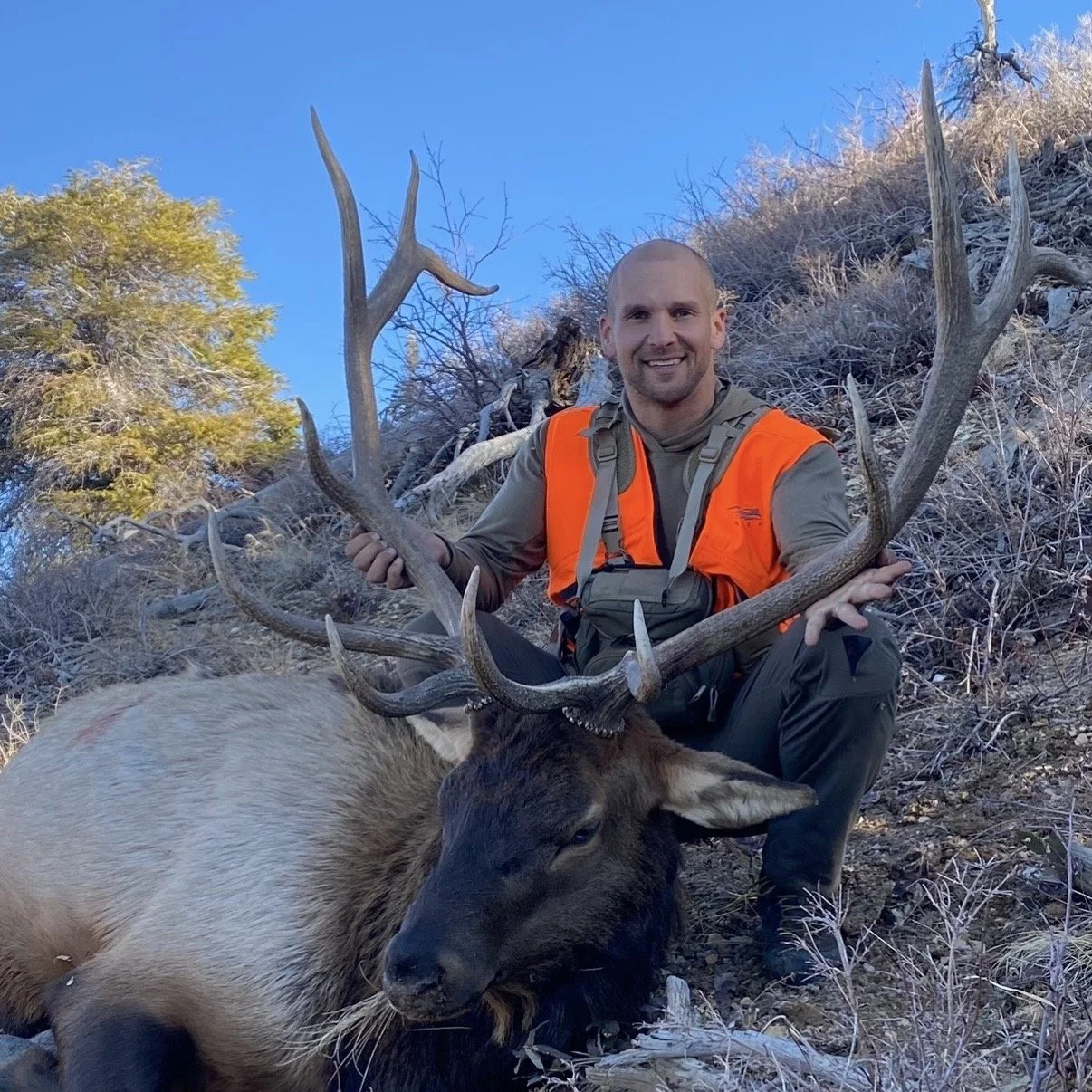
Across the valley, at exactly 919 yards, two 6×6 bull elk slowly made their way from left to right through ankle-deep snow, searching for feed.
The shot broke.
Just over one second later, the 180-grain bullet struck its mark, passing through both lungs and the top of the heart.
No one had ever taught me to hunt. But the previous eight years had prepared me for it.
Over the twelve months between my honorable discharge and the day that elk fell on public land in Colorado, I had become increasingly lost.
During my separation from the Army, I never could have predicted what I would miss the most.
Ironically, it was the very thing so many of us had complained about while we were serving.
The monotony. The frustration. The endless repetition. The seemingly never-ending training, preparation, and planning that went into every mission.
It wasn't just the excitement of the mission itself that I missed.
It was everything that gave the mission meaning.
The discipline. The structure. The attention to detail. The satisfaction of working toward an objective. The feeling that every day had a purpose, and every task was part of something bigger.
It took weeks for the adrenaline from that hunt to finally wear off.
But when it did, I wasn't left with the emptiness I had grown accustomed to feeling.
Instead, I found myself thinking about one thing.
It's time to start training, preparing, and planning for next year.
I was back.
MATT MARTINEZ
BOARD MEMBER
CONNOR FOTSCH
BOARD MEMBER
ANDREW HOANG